

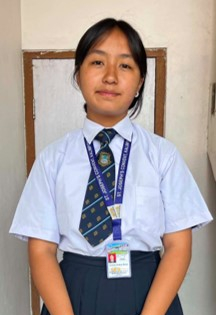
Tenzin L
Jampaling Tibetan Settlement, Nepal • Born in 2010
Tenzin
Tenzin is a 15-year-old student from Jampaling Tibetan Settlement in Nepal. She is currently studying in Class 10 at St. Joseph’s Convent School in India, where her teachers describe her as kind and helpful.
Tenzin particularly enjoys chemistry and has a real interest in learning. Away from her studies, she enjoys sketching, dancing and reading — interests that give a lovely glimpse of the young person she is beyond the classroom.
Tenzin’s parents work hard to support their family and provide an education for both Tenzin and her younger sister. Despite their efforts, meeting the costs associated with keeping both girls in education can be challenging.
As Tenzin approaches an important stage in her education, sponsorship can provide greater stability and help her continue building the knowledge, skills and confidence she will need for whatever path she chooses to follow. It also eases some of the financial pressure on her family as they continue to support both daughters through their education.
Thank you for your commitment
By choosing to sponsor Tenzin you are making a meaningful and generous commitment that will change a life forever.
Your support provides care, opportunity, and stability, and connects you to a community of people whose lives you are helping to transform.
💛 We are deeply grateful for your generosity and trust you are creating hope across generations.
Still have a question?
If you have any questions or would like to talk anything through,
please get in touch - we’re here to help.
call Kennedy on 07557 814177
or
email Kennedy at sponsorship@tibetrelieffund.co.uk
Frequently asked questions
What difference does sponsorship make?
When you sponsor a Tibetan child, elder, monk, or nun living in exile, your support helps provide stability, care, and opportunity. Sponsorship makes a real and lasting difference to people rebuilding their lives and preserving their culture in exile.
What does sponsorship help provide?
Your sponsorship provides vital funding to our partner institutions (such as schools, monasteries, nunneries, or the Lodrik Welfare Fund). These institutions use the funds to ensure your sponsored individual receives education, daily meals, healthcare, accommodation, and overall wellbeing support as part of their daily care.
Will I receive updates?
Yes. You will receive a short biography and at least one update each year about the person you sponsor. If they are unable to write in English, updates may be prepared with the support of a caregiver, teacher, or monastery representative.
You can also choose to be a silent sponsor when setting up your sponsorship.
Can I write to the person I sponsor?
Yes. Many sponsors value the meaningful connection that develops through letters and messages. Correspondence is managed via our partner institutions to bridge the connection with your sponsored individual.
To protect both parties, all correspondence is carefully checked before being forwarded to ensure it is safe, respectful, and appropriate. The wellbeing, safeguarding, and privacy of both our sponsors and sponsored individuals is always our highest priority.
How long does sponsorship last?
We view sponsorship as a long-term commitment that supports children through their full education and ensures elders receive ongoing care. However, we understand circumstances change, and you can adjust or cancel your payments at any time.
If you choose to cancel, our partner institutions step in to ensure the individual's care continues uninterrupted while we look for a new sponsor. A child's sponsorship naturally concludes when they complete their education or vocational training, and we will update you as that transition approaches.
How is my sponsorship donation allocated?
80% of your sponsorship donation is distributed directly to our partner institutions—including the designated school, monastery, nunnery, or the Lodrik Welfare Fund. These trusted partners manage the funds locally to directly cover your sponsored individual's care, accommodation, food, and education costs. The remaining 20% is retained by our charity to cover essential administrative, governance, and UK fundraising costs, ensuring the program can run sustainably and securely.
Can I claim Gift Aid on my sponsorship?
Yes. If you are a UK taxpayer, you can add Gift Aid to your sponsorship at no extra cost to you. Because our charity retains full control and overarching governance of the funds sent to our partner institutions, 100% of your gift eligibility remains intact, allowing us to claim an extra 25p for every £1 you give.
What safeguarding measures are in place for sponsored individuals?
The safety and protection of all individuals in our program is paramount. We work strictly alongside our partner institutions (schools, monasteries, nunneries, and the Lodrik Welfare Fund) to ensure robust child and vulnerable adult safeguarding policies are enforced locally. We do not permit unsupervised direct contact, unvetted visits, or the exchange of personal contact details (such as phone numbers or social media profiles) between sponsors and individuals.
How do you ensure my money safely reaches India and Nepal?
We operate under strict formal written agreements and robust due diligence processes with all our overseas partners, including Lodrik Welfare. Funds are transferred via secure, monitored banking channels. Our partners are required to submit regular, audited financial receipts and itemised reports detailing exactly how the 80% allocation has been spent on care and education.
Why does sponsorship matter?
Tibetan communities living in exile in India and Nepal continue to face many challenges following displacement from Tibet. Sponsorship helps children access education, supports elders in later life, and enables monks and nuns to continue their studies and spiritual practice.
By sponsoring, you are helping preserve Tibetan culture, language, and traditions for future generations while supporting people to live with dignity, stability, and hope.